

Planning Strategies For Business Owners
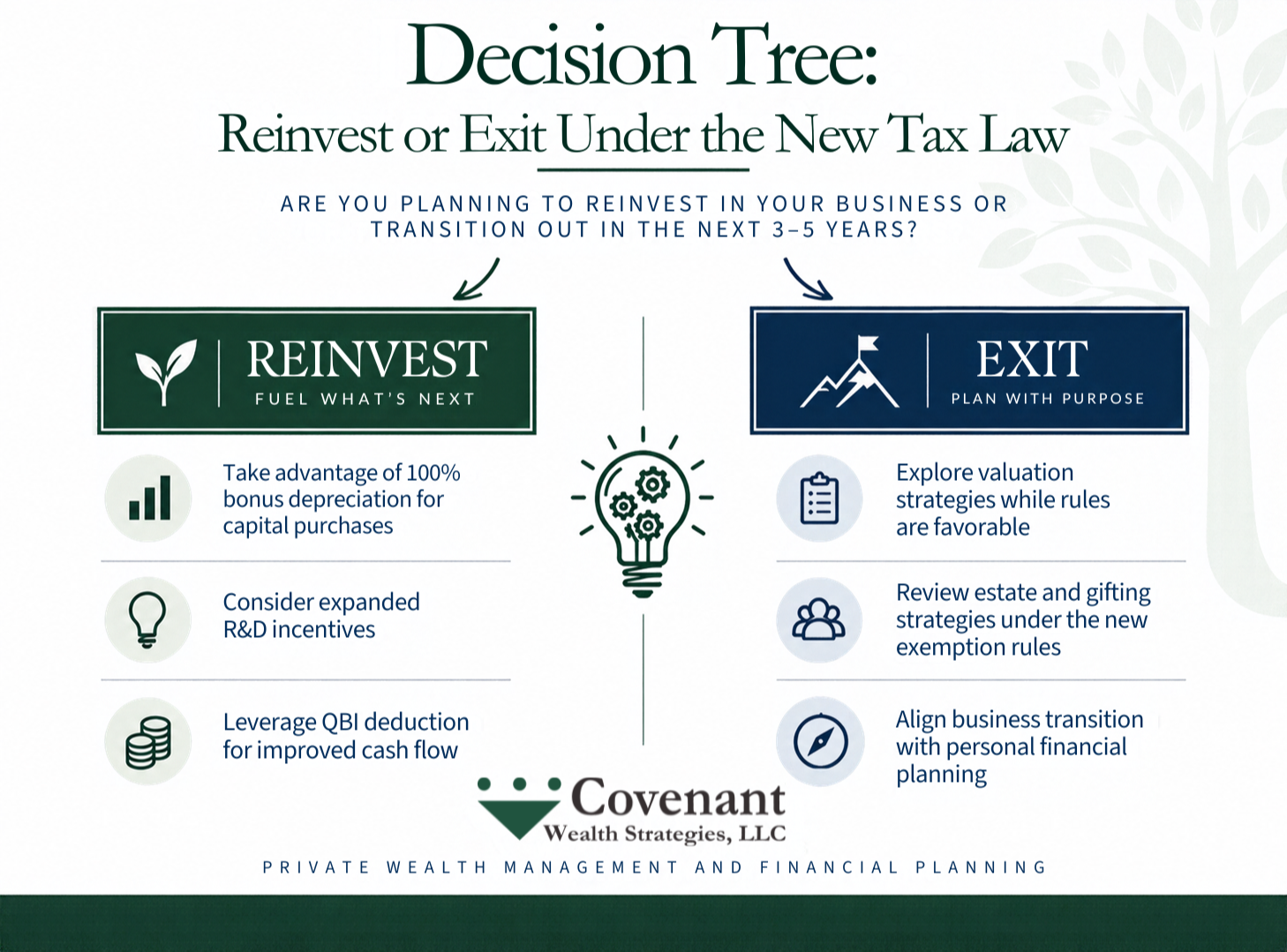
The Tax Simplification and Family Relief Act (H.R. 1), introduces several pro-growth provisions aimed at supporting small businesses, entrepreneurs, and professionals. With these new changes in place, many business owners are asking: Is now the time to reinvest in the business—or begin planning for a future exit while current tax rules are still in effect?
Here’s a closer look at what’s changed—and what you should be thinking about.
Key Business Tax Incentives
✅ 100% Bonus Depreciation Restored
Eligible businesses can now deduct the full cost of qualifying equipment and property in the year it's placed in service. This offers immediate tax savings and improved cash flow — especially helpful for reinvestment in operations or infrastructure.
✅ 20% Pass-Through Deduction Preserved
The law continues the Qualified Business Income (QBI) deduction for S corps, LLCs, and sole proprietors—potentially reducing taxable income by up to 20%. This is a valuable tool for reducing your effective tax rate and enhancing after-tax profitability.
✅ Enhanced Incentives for R&D and Capital Investment
Businesses investing in innovation, process improvements, or domestic manufacturing can take advantage of expanded R&D credits and more favorable tax treatment for long-term capital expenditures.
Why It Matters Now
While these incentives offer meaningful short-term benefits, they also create an important window for longer-term planning, which is relevant for business owners who are:
- Considering succession or exit strategies in the next 3–5 years
- Evaluating major reinvestments or expansions
Planning Ahead: Questions to Consider
- Should I accelerate equipment or technology purchases to take advantage of bonus depreciation?
- Can I use the QBI deduction to enhance personal cash flow and savings before potential sunsets?
- How might this impact the timing of a business valuation or future transition?
- What are the best strategies to align my business growth plans with tax efficiency and legacy goals?
Let’s Talk Strategy
The intersection of tax incentives, business growth, and long-term planning presents an opportunity—and a challenge to get the timing and structure right. If you’re evaluating reinvestment, succession, or exit planning, now is a good time to align those decisions with your tax strategy and personal financial goals.
We welcome you to contact our office for more information about how our team at Covenant Wealth Strategies can serve your financial well-being as a business owner.
Disclosures:
This material is for general information only and is not intended to provide specific advice or recommendations for any individual. There is no assurance that the views or strategies discussed are suitable for all investors. To determine which investment(s) may be appropriate for you, please consult your financial professional prior to investing.
Investing involves risks including possible loss of principal. No investment strategy or risk management technique can guarantee return or eliminate risk.
Indexes are unmanaged and cannot be invested into directly. Index performance is not indicative of the performance of any investment and does not reflect fees, expenses, or sales charges. All performance referenced is historical and is no guarantee of future results.
Unless otherwise stated LPL Financial and the third party persons and firms mentioned are not affiliates of each other and make no representation with respect to each other. Any company names noted herein are for educational purposes only and not an indication of trading intent or a solicitation of their products or services.