

A Closer Look at Inflation and Energy Prices
Energy prices have been an important part of the inflation picture in 2026 as the conflict in Iran continues. While recent data shows some improvement in inflation, higher oil and gasoline prices continue to influence the headline numbers.
Understanding where those pressures are coming from can provide helpful context for investors and households as they look ahead.
Here are a few key takeaways from the latest data:
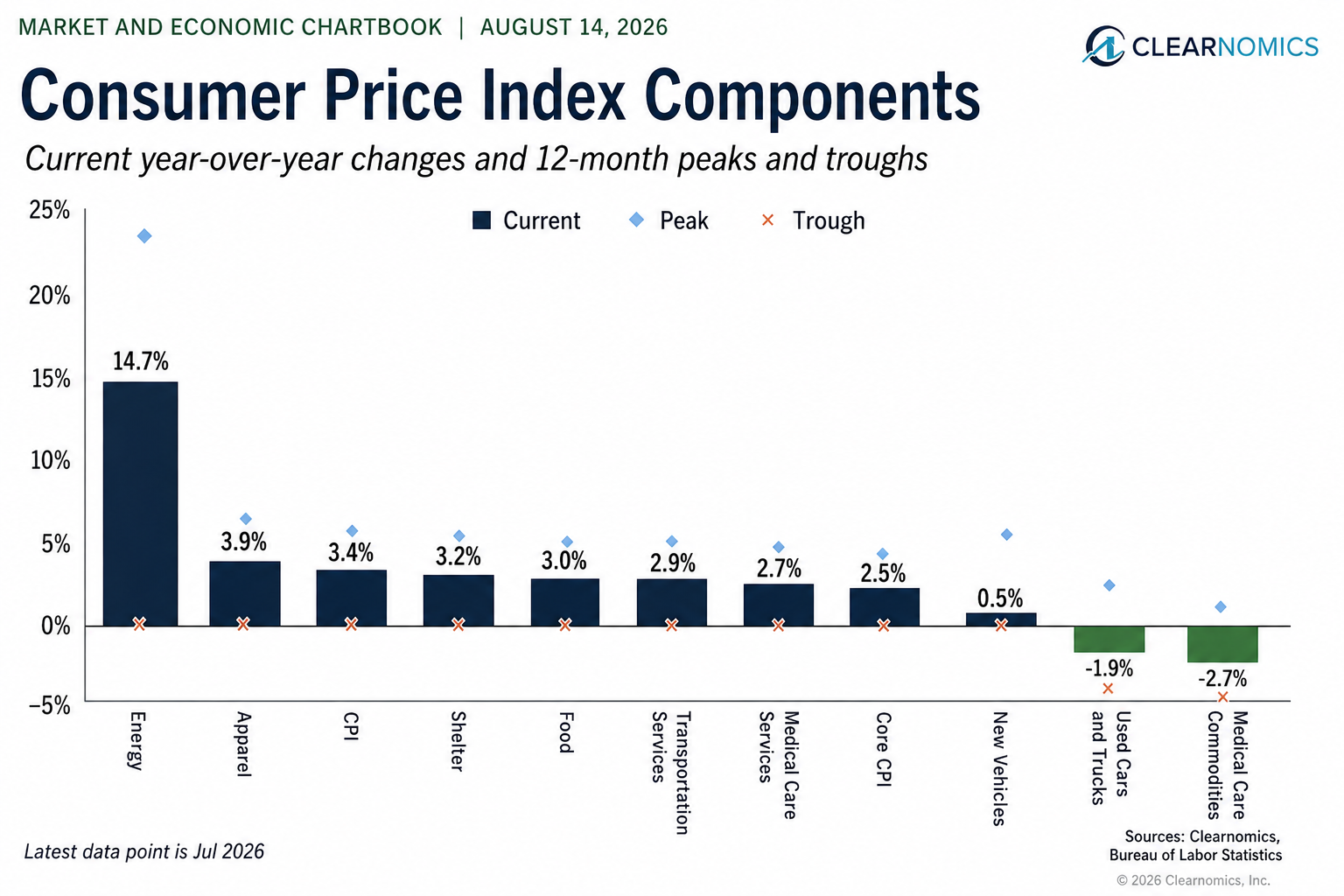
Inflation showed some improvement in July. The Consumer Price Index (CPI) rose just 0.1% in July, in line with economists’ expectations. On a year-over-year basis, inflation remains elevated at 3.4%, improving slightly from 3.5% the previous month. Core CPI, which excludes food and energy, rose 0.2% in July and 2.5% over the past year. These figures are generally encouraging following the significant increases in gasoline and fuel prices earlier this year.
Energy prices remain an important part of the inflation picture. The energy index fell -1.5% in July, even as oil prices briefly jumped during the month, while the gasoline index declined -2.9%. Despite those monthly declines, oil and gas prices remain considerably higher than they were a year ago. The energy index has increased 14.7% over the past twelve months.
Other economic reports also point to a slower pace of price increases. The Producer Price Index showed that prices remained steady in July, which was better than economists had projected. Meanwhile, the University of Michigan Surveys of Consumers showed that many expect inflation to rise 4.3% over the next year, little changed from the prior month.
Inflation outside of energy remains more contained. Food and shelter costs each rose 0.1% in July and are up 3.0% and 3.2%, respectively, over the past year. Core CPI stands at just 2.5%, suggesting that the impact of higher energy prices has not spread broadly across other areas of the economy.
The Fed continues to face a challenging balancing act. Fed Chair Kevin Warsh has reiterated that the Fed will not tolerate inflation above its 2% target. While headline inflation remains elevated due to oil prices, core measures are already much closer to that target. At the same time, the labor market lost jobs last month, echoing last year’s weakness after several months of strong gains.
Periods of higher energy prices can create uncertainty and volatility, particularly when they affect everyday expenses such as gasoline and utilities. However, short-term swings in oil prices are a normal part of economic and market cycles. Maintaining a long-term perspective can help put these changes in context and keep short-term developments from overshadowing long-term financial goals.
If you have specific questions or would like to discuss your own investment strategy or financial planning needs, we welcome you to contact us to set-up a time to discuss further.
Disclosures:
Past performance does not guarantee future results.
All investing involves risk, including loss of principal. Indexes are not investments, do not incur fee and expenses and are not professionally managed. It is not possible to invest directly in an index.
This material is for general information only and is not intended to provide specific advice or recommendations for any individual. This information is not intended to be a substitute for specific individualized tax advice. We suggest that you discuss your specific tax situation with a qualified tax advisor. The charts above are for illustrative purposes only.
S&P 500 Index is a market capitalization-weighted price index composed of 500 widely held common stocks. Diversification does not ensure a profit or protect against a loss in declining market. This material is provided for educational purposes only.
The market indexes discussed are unmanaged, and generally, considered representative of their respective markets. Index performance is not indicative of the past performance of a particular investment. Indexes do not incur management fees, costs, and expenses. Individuals cannot directly invest in unmanaged indexes. Past performance does not guarantee future results.